 How to Choose the Right Ski Length
How to Choose the Right Ski Length
Posted
by
Skis.com
on Friday, July 31, 2026
Ski length is one of those details that makes a bigger difference than most people expect. Get it right, and your skis will feel like a natural extension of your body. Responsive when you want to turn, stable when you want to go fast.
Knowing how to choose the right ski size comes down to a few simple factors: your height, ability level, weight, how you like to ski, and what type of ski you're looking for. And with a good understanding of each, you'll be able to choose the right ski length for you. Let's break it down...
How to Choose the Right Ski Length
When determining the right ski length, many people start with their height and compare different lengths to it. This is a great starting point, it gives you a ballpark of where to start. It's also important to consider your ability level, how much you weigh, how and where you prefer to ski, and the type of ski you’re looking at to determine the right ski length for you. Skis are measured in centimeters, so it’s easiest to convert your height to centimeters and work from there. A general rule of thumb is a ski around chin height or above. Use the ski size chart below to quickly compare recommended lengths based on your height and skill level.
- Beginners should look for skis around chin height, -10 to -15 cm less than their height
- Intermediate skiers are typically around nose-to-eyebrow height, -2 to -8 cm less than their height
- Advanced skiers tend to go forehead height or above, 0 to +5 cm more than their height
Still not sure where you land? This ski size guide covers the basics, but factors like weight, terrain preference, and ski type can shift your ideal length up or down within these ranges.
| Ski Size Chart |
| Skier Height |
Skiing Ability |
| ft/in |
cm |
Beginner |
Intermediate |
Advanced |
| 4'7" |
140 |
125-130 |
132-138 |
140-145 |
| 4'8" |
142 |
127-132 |
134-140 |
142-148 |
| 4'9" |
145 |
130-135 |
132-138 |
140-145 |
| 4'10" |
147 |
132-137 |
139-145 |
147-152 |
| 4'11" |
150 |
135-140 |
142-148 |
150-155 |
| 5' |
152 |
137-142 |
144-150 |
152-157 |
| 5'1" |
155 |
140-145 |
147-153 |
155-160 |
| 5'2" |
157 |
142-147 |
149-155 |
157-162 |
| 5'3" |
160 |
145-150 |
152-158 |
160-165 |
| 5'4" |
163 |
148-153 |
155-161 |
163-168 |
| 5'5" |
165 |
150-155 |
157-163 |
165-170 |
| 5'6" |
168 |
153-158 |
160-166 |
168-173 |
| 5'7" |
170 |
155-160 |
162-168 |
170-175 |
| 5'8" |
173 |
158-163 |
165-171 |
173-178 |
| 5'9" |
175 |
160-165 |
167-173 |
175-180 |
| 5'10" |
178 |
163-168 |
170-176 |
178-183 |
| 5'11" |
180 |
165-170 |
172-178 |
180-185 |
| 6' |
183 |
168-173 |
175-181 |
183-188 |
| 6'1" |
185 |
170-175 |
177-183 |
185-190 |
| 6'2" |
188 |
173-178 |
180-186 |
188+ |
| 6'3" |
190 |
175-180 |
182-188 |
190+ |
| 6'4" |
150 |
178-183 |
185+ |
190+ |
Height and ability level aren’t the only factors to consider. You may want to go up or down in length depending on other factors.
You may want a shorter ski if you:
- Are a beginner
- Weigh less than average for your height
- Prefer to ski casually, rarely go fast
- Like to make short, quick turns
- Choose a ski with little to no rocker
You may want a longer ski if you:
- Are an advanced skier
- Weigh more than average for your height
- Are a strong skier
- Prefer to ski aggressively and fast
- Plan to ski off-trail, in powder, or in varied snow conditions
- Choose a ski with more rocker
Let's take a closer look at how your ability, weight, skiing preferences, and type of ski you're looking for impact your choice in ski length:
Ability Level
Beginner
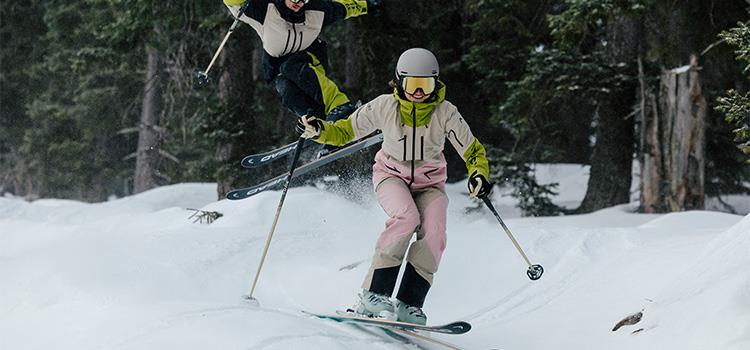
Beginner skiers are those who are skiing for the first time or those who ski occasionally, around 1 to 3 times a year. Beginner skiers are still learning the basics of turning and controlling their speed. They tend to stick to green runs, and as they improve, they begin to link their turns together and even try some easier blue runs. As a beginner skier, a shorter ski is recommended since they are easier to turn and maneuver on the snow, making it easier to gain confidence and control while skiing.
Intermediate
Intermediate skiers are comfortable and confident on green and blue runs. They can stay in control, control their speed, and make a variety of turns, both short and long, on different runs. Intermediate skiers tend to ski at about the same speed as more skiers on the mountain and even start to venture into different terrain like trees, bowls, and easier black runs. They are no longer reliant on the pizza or wedge to control their speed and keep their skis parallel while skiing. For intermediate skiers, it’s recommended to ski around nose to eyebrow height. This will give a good balance of maneuverability and stability.
Advanced
Advanced skiers are able to ski confidently and in control on most, if not all, terrain on the mountain. They tend to ski faster and ski a variety of terrain like bumps, bowls, trees, steeps, and chutes. Advanced skiers tend to know a general idea of what ski length they prefer. Most go for a bit of a longer ski because they are more stable at speed and steeper terrain.
Weight
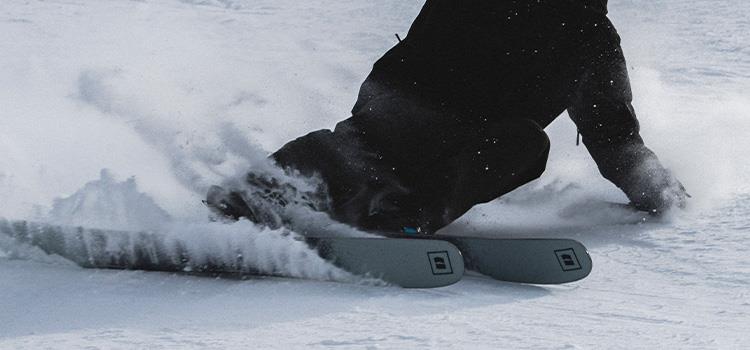
A skier’s weight plays a significant role in how the skis flex or bend, which directly impacts the ski’s performance.
If you’re able to over flex a ski, the ski will feel unstable, like you’re going over the handlebars, because the ski isn’t able to give you the resistance you need. As a result, you’ll feel like you’re not in control, and you’ll have a lot of fatigue trying to overcompensate.
On the other hand, if you’re under flexing a ski, it will also feel unstable and like you’re lacking control, but for other reasons. In this case, the ski is in charge rather than the skier. It will be more difficult to initiate turns, and you’ll have less edge hold. Ultimately, you’re not experiencing the true beauty of the ski.
Generally, if you weigh more than average for your height, choose a longer ski for more stability. If you weigh less than average for your height, it’s better to choose a ski for better maneuverability and control.
Skiing Preferences
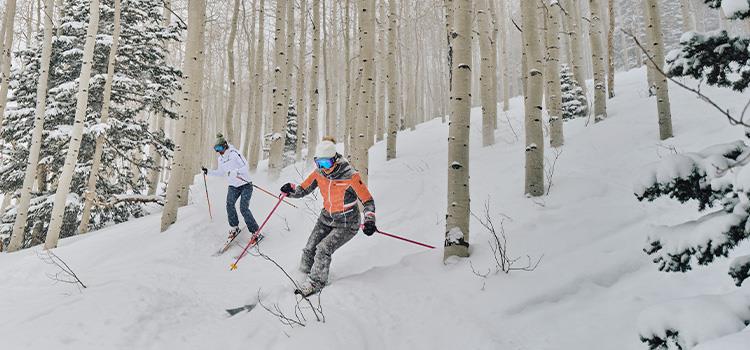
Finding the right ski length is a balance of maneuverability and stability. Shorter skis are less demanding and easier to maneuver, making them a good choice among casual skiers who prefer a more moderate speed. They’re also perfect for those who like to spend time in tight terrain like bumps and trees, where quick, snappy turns are crucial.
On the other hand, longer skis are built for skiers who like to ski fast and aggressive. A longer ski is more stable due to its longer effective edge, which translates to better edge hold and stability at higher speeds. Longer skis also perform great off trail, like cutting through crud and providing more flat through powder.
| If you like ... |
You'll want ... |
| Skiing casually at a more moderate speed |
A shorter ski is less demanding, meaning it is easier to control and turn at lower speeds |
| Tight turns and skiing through bumps, tighter trees |
A shorter ski is quicker to turn |
| Skiing fast and aggressive |
A longer ski will feel more stable at speed because it has a longer effective edge |
| Skiing off trail through powder and bowls |
A longer ski has more surface area, meaning better float through softer snow rather than sinking |
Ski Profile
Ski construction also plays a role in choosing the right length. A carving or front side ski typically has a camber profile with little to no rocker, which creates a longer effective edge, meaning more of the ski’s edge is in contact with the snow. As a result, you’re feeling the full length of the ski, so it’s usually recommended to size down slightly.
On the other hand, skis like freeride and powder skis are built with rocker, meaning more of the tip and tail curve up off the snow. This helps the skis float over soft snow rather than sinking. The tradeoff is a shorter effective edge, meaning less contact with the snow. A ski with more rocker will feel like it skis shorter than it looks, so it’s usually recommended to size up.
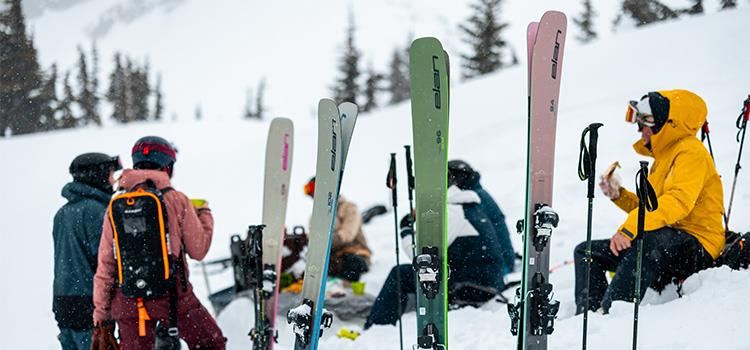
Ski length isn't one-size-fits-all, but it doesn't have to be complicated either. Start with your height as a baseline, factor in your ability, weight, and how you like to ski, and keep the type of ski in mind. The best ski length is the one that makes you feel confident and in control. Everything else is just fine-tuning.
Related Articles:
Categories:
Buying Guide
Tagged: Ski, How to Choose