 Ski Boot Flex Explained: How to Choose the Right Flex
Ski Boot Flex Explained: How to Choose the Right Flex
Posted
by
Skis.com
on Thursday, August 20, 2026
When you’re shopping for ski boots, you’ve probably noticed numbers like 80, 100, and 120 attached to different models and wondered, what does that even mean?
That number refers to the ski boot’s flex, and it plays a major role in how ski boots feel and how they perform on snow. While it can seem like a small detail when it comes to a boot fit, choosing the right ski boot flex can make a big difference in your comfort level, control, and confidence while skiing.
A boot that’s too soft can feel unstable, while a boot that’s too stiff can make it difficult to get in the proper skiing stance. Both are pretty frustrating while skiing. The goal is finding the right flex that balances support and performance and matches your ability level, body, and skiing style. Let’s break it down.
What is Ski Boot Flex?
First, let’s define what we’re talking about. Ski boot flex index refers to how stiff or soft a ski boot is. It’s how much resistance a boot provides when you flex into it by bending your knees and applying pressure through your shins against the tongue of the boot. Ultimately, how easy or difficult it is to bend the boot while skiing.
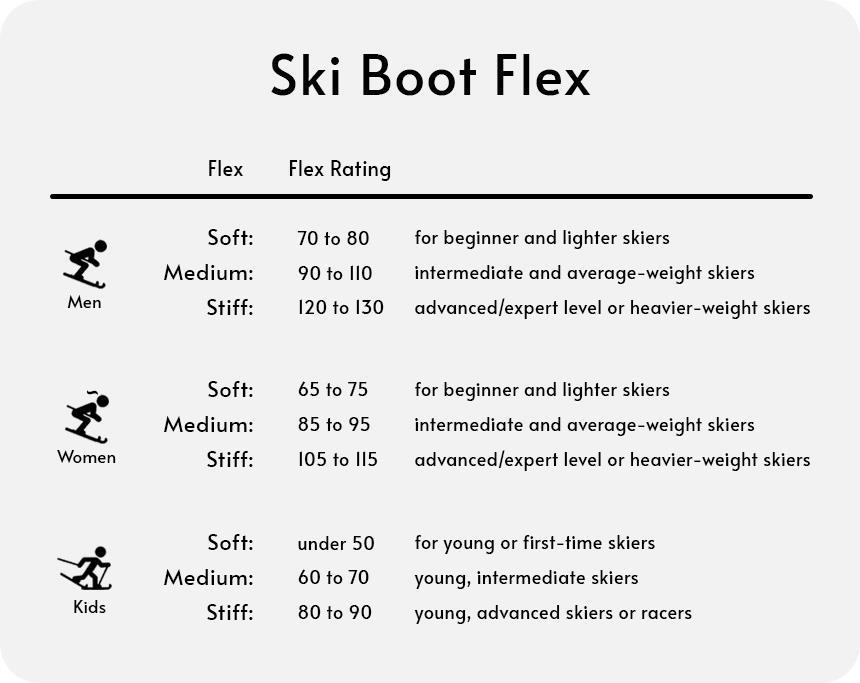
Adult ski boots typically range from about 60, for softer beginner-friendly boots, to 130 and above, for high-performance models. The lower the flex number, the softer and more forgiving the ski boot feels. On the contrary, the higher the number, the stiffer and more responsive the boots will feel.
Lower flex = softer, more forgiving
Higher flex = stiffer, more responsive
Before diving too deep into this, it’s important to note that flex is not a standardized measurement across the ski industry. Meaning, a 100 flex ski boot in one brand may not feel exactly like a 100 flex ski boot from another brand. Flex is still an important factor to help skiers understand the general stiffness of a boot, compare different models across brands, and narrow down options. Ultimately, the best judge of ski boot flex comes from getting an idea of what flex is right for you and trying on different models and brands to find the right fit.
Differences Between Soft and Stiff Ski Boots
Softer Ski Boots
A softer-flexing ski boot is easier to bend, which generally makes them:
- More forgiving of mistakes
- Easier to control at slower speeds
- More comfortable for long ski days
- Great for beginners and recreational skiers
Softer-flexing ski boots are popular among new skiers since they tend to feel less demanding, encourage natural movement, and don’t punish every little technique error. If you’re learning, skiing mellow terrain, or prioritizing comfort, a softer flex often makes a lot of sense. And it’s not just for beginners, many casual or intermediate skiers prefer softer-to-mid flex boots because they match their skiing style and are simply more comfortable on long days.
Stiffer Ski Boots
Stiffer ski boots are designed to deliver more direct power and precision, which translates to:
- Faster response
- Better edge control
- More stability at speed
- More support in steep and technical terrain
For advanced skiers, the responsiveness makes a huge difference. When you’re skiing aggressively or carving hard, a stiffer boot helps transfer energy more efficiently into the ski, which improves your control and precision.
The tradeoff? A stiffer boot requires more strength and the proper technique. If you cannot flex the boot, you lose many of the benefits that come with a higher flex rating, but what you’ll probably notice the most is how much more frustrating skiing would be.
How to Choose the Right Ski Boot Flex
Choosing ski boot flex is highly personal, and what works for your friend might not work for you. It’s important to take into account your unique attributes like your ability level, weight, strength, skiing style, and personal preferences.
1. Ability Level
Skiing ability is a big factor to consider when choosing flex.
Beginner and more casual skiers tend to like softer flexing boots because they:
- Make learning easier
- Encourage proper stance
- Feel less demanding
- More forgiving of mistakes
Advanced skiers often prefer stiffer ski boots for:
- Faster response
- More precision when it comes to carving and turns
- Stability at speed
- Higher performance in varied terrain
2. Weight
Ability level isn’t the only factor to consider when choosing ski boot flex. It’s also important to assess a person’s weight, strength, and athleticism. A strong athletic beginner would most likely benefit from a mid-level flex that's more support and resistance, since they probably have the needed strength for it. A soft-flexing boot might actually feel like more work trying to keep from over-flexing the boot.
Heavier or stronger skiers can typically generate more force, meaning they may need a stiffer boot to get the right amount of support and resistance. Lighter skiers may have a harder time flexing an overly stiff boot, which negatively affects balance and proper skiing technique.
3. Terrain
Where and how you ski matters too. If you mostly ski casual groomers and mellow resort runs, a softer to moderate flex is often plenty. For skiers who prefer more advanced terrain like bumps, trees, steeps, and off-piste, a somewhat stiffer ski boot will provide extra support and better control. And for fast, aggressive carving like for ski racers, a stiffer, high flex boot will give skiers the performance and precision needed.
4. Personal Preference
Ultimately, the difference between choosing a 100 flex vs a 110 flex boot comes down to personal preference. Ability level, weight, and the terrain you ski play a large role in choosing the right flex, but dialing in the details comes down to what is most comfortable and will allow you to ski confidently.
And two skiers of the same ability level, height, and weight can still prefer completely different boots. Some skiers prefer the comfort and flexibility of a softer boot. Others prefer the secure, more powerful feeling of a stiffer boot. The goal isn’t to find the stiffest boot, it’s finding a boot that provides the support and performance you need while still allowing you to flex it properly.
Can a ski boot be too soft?
Yes. Softer ski boots are comfortable and more forgiving, but there is a point where a boot can be too soft for a skier’s ability and strength.
A boot that is too soft will feel sloppy. Instead of the boot immediately responding when you flex into it, it feels like it takes extra effort before the skis engage. You’ll find yourself working harder to get your skis to respond, affecting your balance and causing more fatigue throughout the day. It’s especially noticeable at higher speeds and for more aggressive skiers where extra support and precision are key.
Can a ski boot be too stiff?
Also yes. And it’s a common mistake. A higher flex rating is often associated with better performance, but a stiffer boot only works if you have the strength and technique to properly flex it. If you cannot bend the boot, the boot will be fighting against you rather than helping you.
A boot that is too stiff makes it difficult to get forward over your skis. You’ll end up standing too tall and have too much weight in your back seat, preventing you from skiing properly. Ultimately, it will make for an uncomfortable skiing experience. Like too soft of a ski boot, too stiff of a ski boot will make your skiing feel less controlled, increase fatigue, and lead to more frustration.
The goal is finding the balance: a boot stiff enough to support your skiing, but soft enough that you can actively flex and control it.
Does a ski boot’s flex change over time?
Yes, ski boots become softer as they age. Because they’re made out of plastic, the more they’re skiing, the more flexible that plastic becomes.
Most suggest replacing your ski boots after 150 to 200 ski days, since that’s when there’s the most noticeable drop in performance, but it also depends on how hard you ski and how rough you are with your gear.
What affects a ski boot flex while skiing?
Your ski boot’s flex isn’t always going to feel exactly the same every day. Conditions, temperature, and how you wear your boots can all affect how stiff they feel.
Colder temps make the plastic stiffer, while warm temps, like in spring skiing, can make a stiff boot feel significantly softer. How you buckle your boots also changes how they feel. The tighter the buckles, especially around the upper cuff, can make your boot feel stiffer.
Choosing the right ski boot flex is all about finding the right balance. You want a boot that supports your skiing, responds when you need it to, and still allows you to flex and move comfortably throughout the day.
A boot that is too soft may leave you feeling unsupported, while a boot that is too stiff can make skiing feel harder than it should. The goal is not to choose the highest flex number, it’s to find the boot that helps you ski with more control, confidence, and comfort. Every skier is different, and the best flex depends on your ability, strength, and the way you like to ski.
Categories:
Buying Guide
Tagged: Boots, How to Choose