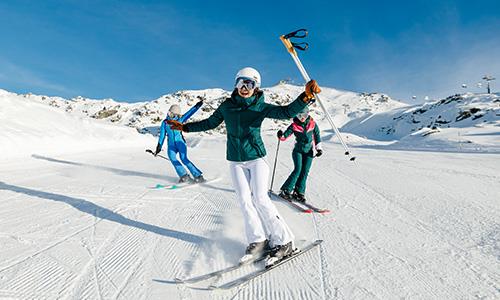
Ski poles play a key role in balance, stability, and rhythm while skiing. They give you an extra push when traversing on flat snow and can be used to pop out of your bindings.

Picking out the right ski pole is pretty simple. The most important part is determining the right length. Then you can explore the different types of ski poles for what you need. Here’s a quick guide on choosing a ski pole:

Ski Pole Length

In most cases, the 90-degree rule will serve you well in choosing the right ski pole length. If you have a ski pole, flip it upside down so the grip is touching the floor and the basket is facing up. Stand tall, keep your elbow at your side, and grab the pole right under the basket. With the proper ski pole length, your elbow should be at a 90 degree angle.

If you don’t have a ski pole no hand, use a simple ski pole size chart based on your height or measure from the ground to your elbow when standing tall.

Ski poles usually come in 2-inch (5 cm) increments. If you’re between sizes, go with the slightly shorter ski pole. A short ski pole will help you keep your weight forward when pole planting and be more comfortable in the bumps and trees. 

Also, Park skiers often use shorter poles or skip them entirely to keep them out of the way when doing jumps, spins, and tricks.

Here is a simple size chart is a good guide to determine the optimal ski pole length for your height:

Back to Top

Why don’t Beginners or Kids use Ski Poles?

Many beginner skiers, especially kids, learn without ski poles. When starting, ski poles tend to get in the way, so starting without them makes things simpler. Also, using ski poles prematurely can lead to poor skiing posture. As a beginner, it’s important to develop good habits and learn fundamentals like balance, turn initiation, and body position. Once you’ve got those down and you’re exploring faster and steeper terrain, you’ll be ready for ski poles.

Types of Ski Pole Materials

The four most common materials used for ski poles are aluminum, carbon, composite, and bamboo. Each has its advantages, like durability, weight, and price point. Here’s the breakdown:

  • Aluminum ski poles are the go-to choice for ski poles. They are a pretty durable and economical option, serving most skiers well. The downside to aluminum ski poles is that they’re slightly heavier than the other options and have the potential to bend.
  • Carbon Fiber ski poles offer better durability and are lighter in weight compared to aluminum ski poles. They are a great choice for backcountry skiers or those looking to upgrade their current setup.
  • Composite ski poles use a combination of aluminum and carbon. As a result, they are more durable, lighter weight than aluminum ski poles, and more affordable than carbon ski poles.
  • Bamboo ski poles offer a balance of rigidity and flexibility. They’re not as common as the other options, but are growing in popularity due to their reasonable price, strength, and being a solid eco-friendly choice on the mountain.

Back to Top

Ski Pole Grip Options

Ski pole grips come in various sizes, shapes, and materials for added comfort while skiing. The most common materials used are rubber, plastic, or foam.

You can also find cork grip ski poles, which tend to be on higher-end ski poles. They are lighter weight, have a more comfortable feel, and don’t get cold as quickly as other materials.

For backcountry skiers, you can find ski poles with longer grips. They’re designed so your hand placement can move up and down the ski pole depending on the terrain you’re on. The longer group allows skiers to quickly “shorten” the poles on steeper terrain.

Ski Pole Straps

Ski pole straps are mostly made from flexible nylon. If used properly, they are super helpful to still have leverage when pole planting, even if you lose your grip. They also help prevent you from losing your ski poles while skiing and on the chairlift.

To use wrist straps correctly, slide your hand up and through the strap. Then grab the grip with your thumb and hand over the strap.

Some poles have detachable straps, like the Leki Detect and Stella Ski Poles. This makes it super convenient when getting on the ski lift or when setting your poles down to reach into your pocket. It also adds a level of safety, since the quick release reduces the risk of the ski poles being dragged or caught during a fall.

Ski Pole Baskets

At the end of the ski poles is the basket, which helps the poles from sinking into the snow. A standard basket is about 5 centimeters across and perfect for most resort skiing. Most baskets are replaceable if you break or lose one.


Some ski poles have interchangeable baskets for different conditions. In deep snow or backcountry conditions, you can get ski poles with larger powder baskets. They’re about double the size, close to 10 centimeters across, and prevent the poles from sinking in lighter snow—think of it like snowshoes.

Adjustable Ski Poles

Common among backcountry skiers and splitboarders, adjustable ski poles can be a great option depending on what you’re looking for. These poles are telescopic, allowing them to be extended on the fly. Backcountry skiers typically use adjustable ski poles, allowing them to have a longer pole for increased leverage while ascending or traversing, and then adjust to a shorter length for the descent.

You can even find adjustable ski poles for kids. This is a great option for kids who have mastered the basics and are ready for ski poles and are growing. Parents can adjust the ski pole each year rather than buying a new one every time their child grows.

Back to Top

Final Thoughts

Choosing the right ski poles comes down to finding the right length, material, and features that suit your skiing needs. Whether you're just starting out or looking to upgrade your setup, the right poles can improve your performance, comfort, and confidence on the mountain.

Quick Recap:

  • Use the 90-degree elbow rule or a ski pole size chart.
  • Beginners can skip poles at first.
  • Choose materials based on your budget and skiing style.
  • Don’t overlook grip, straps, baskets, and adjustability.