 The Different Types of Skis Explained
The Different Types of Skis Explained
Posted
by
Skis.com
on Thursday, August 21, 2025
If you're shopping for a new pair of skis, understanding the different types of skis and how they’re designed for specific terrain and conditions is essential. Whether you're carving up groomers, floating through powder, or exploring backcountry terrain, there's a ski built for your style.
Understanding Key Ski Terms
Before we dive into the various ski types, let’s define a few important terms that impact how skis perform on snow. These fundamentals are good to know when comparing skis and selecting the best fit for your needs.
Ski Profile: Camber and Rocker
A ski’s profile—or how it curves from tip to tail—affects everything from how easily it turns to how well it grips the snow.
Camber: Camber refers to the curve that lifts the middle of the skis off the snow. When you stand on a cambered ski and carve through turns, the camber flattens out, creating solid contact with the snow known as the effective edge. The more camber a ski has, the longer its effective edge, leading to better edge hold, a snappier rebound out of turns, and more control on groomed trails.
Rocker: Also referred to as reverse camber, rocker lifts the ends of the skis off the ground, creating a “u” shape similar to a rocking chair. This helps with turn initiation, makes for a more forgiving ski, and improves float in powder and lighter snow.
Most skis today use a combination of camber and rocker to balance edge hold and versatility.
Waist Width
A ski’s waist width refers to the narrowest point of the ski, located underfoot. The width of a ski directly impacts the ski’s performance in various snow conditions:
Narrow skis, with a width of around 70-85mm underfoot, allow for quick edge-to-edge transitions, creating faster turns and making them more ideal for carving and hardpack conditions.
Mid-width skis are around 85 to 100mm underfoot. Mid-width skis are versatile across a variety of conditions, common in all-mountain skis.
Wide skis with a width of over 100mm underfoot provide maximum float and stability in powder and lighter snow, but make it difficult to carve.
Turn Radius
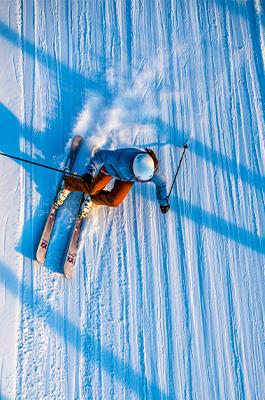
The turn radius tells you how tight the ski turns when rolled on edge. It’s a direct result of the sidecut, the difference between the width of the ski’s tip, waist, and tail. The sidecut is the hourglass or parabolic shape of the ski when you look from a bird's-eye view. A ski with a greater difference between the tip and tail versus the waist has a steeper sidecut, thus a tighter turning radius, making for shorter turns.
Short Turn Radius (10 to 15 meters): Snappy turns, perfect for tight terrain like moguls, trees, and carving on groomed slopes.
Medium Turn Radius (15 to 20m): Balanced for all-mountain versatility
Long Turn Radius (20m +): Stable at speed, built for big mountain lines and wide, sweeping turns. Good for aggressive, high-speed skiers.
Types of Skis
Now that you understand the terminology, let’s explore common types of skis and what they’re built for. Use this as your starting point to find the right ski for your style and conditions.
Race
Starting on the narrow side of things, race skis are built for speed, precision, and ultimate edge hold on hard snow. They’re designed for competitive racers and advanced or expert skiers who are capable of maintaining proper technique and carving consistently on groomed runs.
Race skis are narrow, typically 65 to 70mm underfoot, which makes for quick transitions between turns. This, combined with their full camber profile, makes these skis fast and provides superior edge hold on snow. Race skis typically have a sheet or two of metal to create a heavy, stiffer, and more stable ski that has no problem finding an edge.
Carving
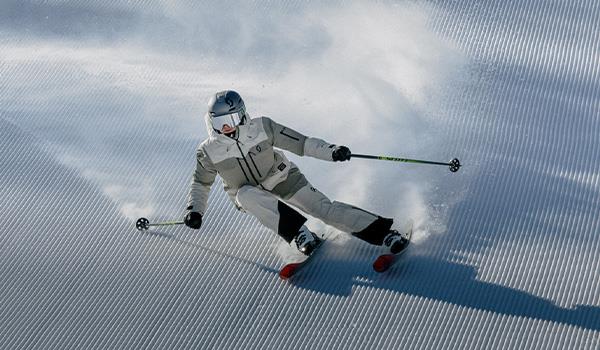
Think of carving skis as race skis’ more recreational cousin. They’re not as aggressive as race skis but still offer top performance for carving tight, clean turns on groomers.
In carving skis, you’ll find traditional full camber and some with a little rocker in the tip of the ski for maximum effective edge and edge hold on piste, while being a little more versatile for when groomers are less than pristine.
Carving skis are narrow, ranging from 65 to 80 mm, with a pronounced sidecut, meaning a tighter turning radius. Carving skis typically feature a sheet of metal or two, providing a snappier feel out of turns and increased stability at speed. Carving skis make a great choice for strong intermediate to advanced skiers who love to go fast and rip groomers all day.
Frontside Skis
Frontside skis combine carving and versatility. As the name suggests, frontside skis are perfect for skiers who plan to stay on the “front” side of the mountain, where there’s an ample supply of maintained trails. Usually a little wider than carving skis, you can find frontside skis around 80 to 90mm underfoot. Frontside skis still prioritize good edge hold on hard-packed snow and crud, so you’ll find a good amount of camber underfoot, rocker in the tip, and some rocker in the tail of the ski. The added rocker makes for a more versatile ski that can tear through crud while still excelling on groomed runs, making it perfect for intermediate and advanced skiers who spend their days on-piste.
All-Mountain Skis
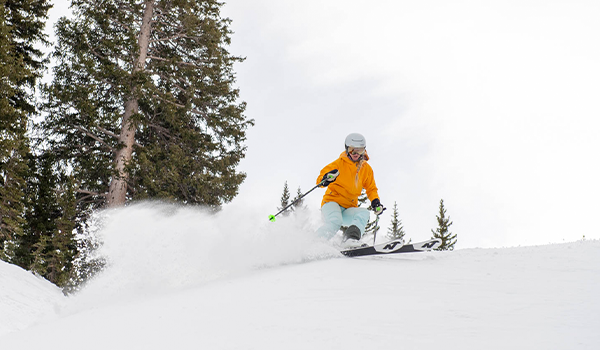
The name says it all; all-mountain skis are designed to be taken almost anywhere on the mountain, from groomers to off-piste terrain, bumps, trees, powder, and a park lap here and there. It’s a broad category and the most popular type of ski that encompasses a variety of skis suited for all age groups and experience levels.
All mountain skis are made of a variety of materials. At the entry and budget-friendly level, you’ll find a mix of foam and wood cores, which are more affordable and have a softer flex, ideal for young and beginner skiers. Most all-mountain skis feature a wood core. Wood cores are the gold standard for materials used for skis, thanks to their rigidity and long lifespan. In more aggressive, hard-charging skis, you can find all-mountain skis with a wood core plus a layer of carbon fiber or metal, or a mix of both for stiffer, harder-charging skis.
When it comes to profile, all-mountain skis have camber underfoot with some rocker in the tip and tail. Most have a bit more rocker in the tip of the skis to help the skis sit on top of the snow and for easier turn initiation. All-mountain skis tend to have a medium waist width, somewhere around 85 to about 105mm underfoot. Because this covers such a wide variety of skis, some skiers categorize the all-mountain category into two subcategories: all-mountain and all-mountain wide.
All-Mountain Wide Skis
All-mountain wide skis include wider all-mountain skis between 90 and 105mm underfoot. All-mountain wide skis are perfect for bigger mountains, especially out West. On the East Coast, runs tend to be narrower and the snow tends to be firmer, so a narrower all-mountain ski in the 80s to upper 90 mm underfoot is agile enough and quick-turning. These narrower all-mountain skis can still be great out West, but some prefer a wider all-mountain ski to match the wider trails and lighter snow found on the West Coast.
Park
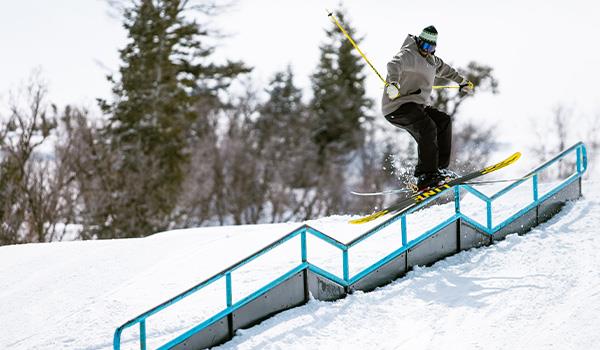
Park skis are designed for hitting jumps, boxes, rails, tricks, and features in the terrain park. They’re typically lightweight, featuring a softer flex for a more playful feel, and are more durable to withstand impacts. Park skis are usually have a relatively straight side cut and tend to be narrower, around 80 to 95 mm underfoot, but up to personal preference.
True park skis are often referred to as “twin tips” since the amount of rocker in the tip and tail is equal. This symmetrical shape, plus most skiers’ preference to mount their ski bindings dead center, creates the same feel while skiing forwards and back, making it easier and more comfortable when taking off and landing switch.
Freestyle
Freestyle skis are a bit more versatile version of park skis. Freestyle skis feature a more directional shape, bindings slightly back from center, and some all-mountain characteristics, making for a perfect ski for those who like to spend time in the park and explore around the mountain.
Freeride
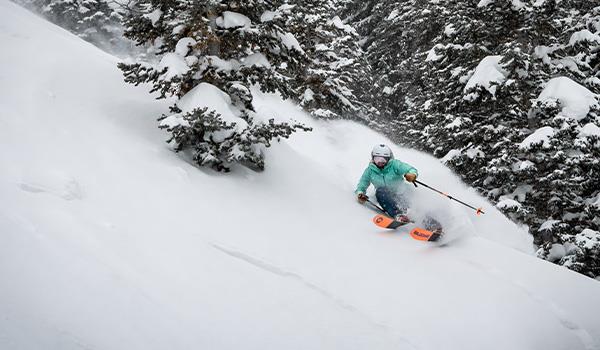
Freeride skis are like the all-terrain powder ski. It's not as wide as a true powder ski and typically a bit stiffer. Freeride skis are usually over 100mm underfoot with a significant amount of rocker in the tip and tail, making them a great choice for big-mountain skiing to take through the trees, bowls, powder, and really, anything you can think of.
Powder
As the name suggests, powder skis are specifically designed for deep snow and off-piste terrain. Their wide shape and pronounced rocker keep you floating and stable in soft snow, with over 115mm underfoot or wider. Because of their width and rocker-dominated profile, powder skis don’t do a great job on groomed trails; they take more effort to turn and have less edge hold, but for advanced and expert skiers who spend their days in the back bowls chasing the fresh stuff, it’s not a problem.
Backcountry
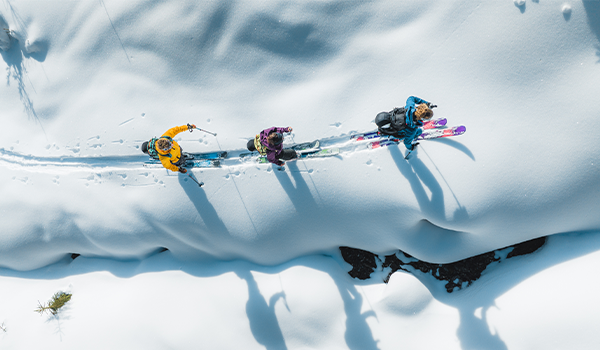
Backcountry and touring skis are designed for those seeking to venture beyond the resort and explore untracked powder. Backcountry skis tend to have more rocker in the tip and tail than all-mountain skis for more float, but still have camber underfoot for good edge hold, which is helpful during the uphill. Backcountry skis are also super lightweight, making them light and nimble for an easier uphill climb.
Whether you're a beginner sticking to groomers or an expert chasing powder in the backcountry, choosing the right type of ski can make all the difference in your experience on the mountain. By understanding ski categories—like all-mountain, carving, powder, and park—as well as key features like camber, rocker, waist width, and turn radius, you'll be better equipped to find skis that match your terrain, ability level, and style. Take time to consider where you’ll be skiing most often, and don’t be afraid to ask questions or demo a few pairs before buying. The right skis aren’t just about specs—they’re about helping you enjoy every run to the fullest.
Categories:
Buying Guide
Tagged: Ski, How to Choose