 What Ski Goggle Lens Should You Use
What Ski Goggle Lens Should You Use? A Simple Guide to Lens Options
Posted
by
Skis.com
on Monday, May 4, 2026
Choosing the right ski goggle lens can completely change your day on the mountain. The right lens helps you see terrain clearly, reduces eye strain, and keeps you skiing confidently in changing conditions. The wrong one? Flat light, glare, and missed details that make everything harder than it needs to be.
If you’ve ever wondered which ski goggle lens to use on a sunny day vs. a snowy one, or what terms like VLT and S rating actually mean, this guide breaks it all down in a simple, no-nonsense way.
Think About What Conditions You’ll Be Skiing In
Before getting into technical terms, start with the basics: weather and light conditions.
Different lenses are designed for different environments. There’s no “one perfect lens” for every day (unless you’re using a photochromic or swapping lenses).
Here’s a quick breakdown:
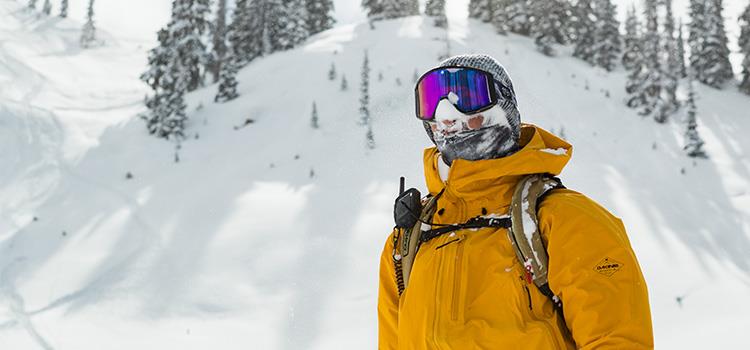
- Sunny / Bluebird Days
Go for dark lenses like black, gray, or mirrored finishes. These reduce glare and brightness so your eyes don’t get fatigued. - Partly Cloudy Days
Choose versatile lenses like rose, copper, or amber. These enhance contrast and work well in mixed light. - Overcast / Flat Light / Snowy Days
Use lighter lenses like yellow, gold, or clear. These brighten your view and help define terrain when everything looks flat. - Night Skiing
Stick with clear lenses to let in as much light as possible.
VLT (Visible Light Transmission)
VLT is one of the most important things to understand when choosing a ski goggle lens.
VLT = the percentage of light that passes through the lens to your eyes.
- Low VLT (4–20%)
Less light comes through → best for bright, sunny conditions - Medium VLT (20–40%)
Balanced light → great for variable conditions - High VLT (40–80%)
More light comes through → ideal for low-light, cloudy, or snowy days
Why It Matters
If your lens lets in too much light on a bright day, you’ll be squinting.
If it blocks too much light on a cloudy day, everything will look dark and flat.
Matching VLT to conditions = better visibility and less eye fatigue.
S Rating (Lens Category)
You might also see ski goggle lenses labeled with an S rating (S0–S4). This is another way of classifying how dark a lens is.
- S4 – Very dark (extreme sun, high alpine — less common for skiing)
- S3 – Dark lenses (bright sunlight)
- S2 – Medium tint (mixed conditions)
- S1 – Light tint (overcast or snowy days)
- S0 – Clear lenses (night skiing or very low light)
How S Rating Relates to VLT
Think of S rating as a simplified version of VLT:
The higher S rating = less light gets through. The lower S rating = more light gets through.
Most skiers will rotate between S1–S3 lenses depending on the day.
| Skiing conditions you're dealing with... |
Recommended VLT |
Suggested S Rating |
Best lens colors for the day |
| Bright sun, no clouds |
4 - 8% |
S4 |
Platinum, black, onyx, red |
| Mostly sunny |
8 - 20% |
S3 |
Blue, green, red, etc. |
| Part sun, part clouds |
20 - 40% |
S2 |
Blue, green, red, etc. |
| Overcast, low-light, cloudy, snowy conditions |
40 - 80% |
S1 |
Yellow, amber, copper, rose |
| Heavy snow, night skiing |
80 - 100% |
S0 |
Clear |
If you want a quick rule of thumb:
- Bright sun? Low VLT / S3 lens
- Mixed conditions? Mid VLT / S2 lens
- Cloudy or snowy? High VLT / S1 lens
If you ski in changing conditions a lot, consider:
- Interchangeable lenses, or
- Photochromic lenses that adjust to different light conditions
Ski goggle lenses aren’t just about color, they’re about performance. Understanding VLT and S ratings makes it much easier to pick the right lens for the day and actually enjoy your time on the mountain.
Once you dial in the right lens, you’ll notice better contrast, clearer terrain, and way less guesswork when conditions change.
Shop Our Selection of Ski Goggles
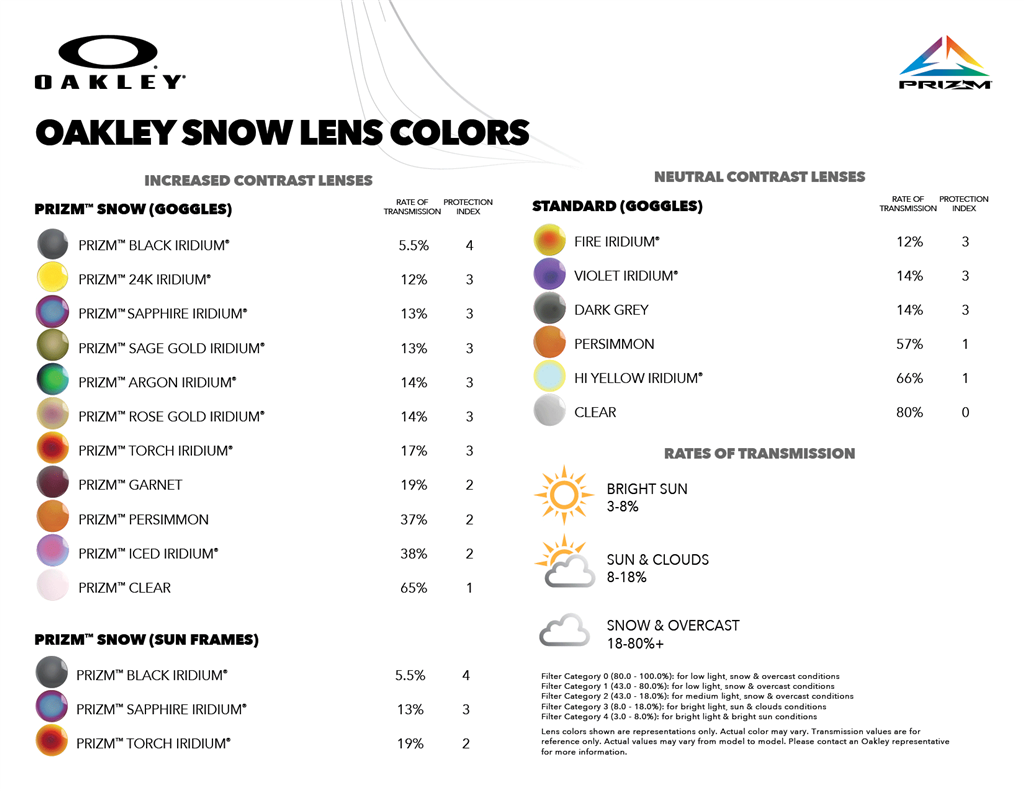
Oakley Lens Chart:
Shop Oakley Goggles
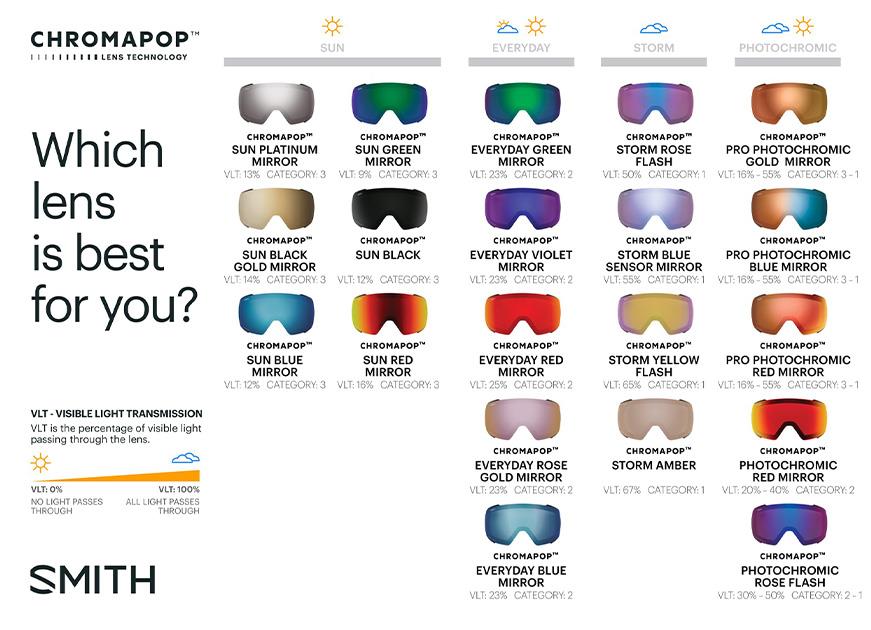
Smith Lens Chart:
Shop Smith Goggles
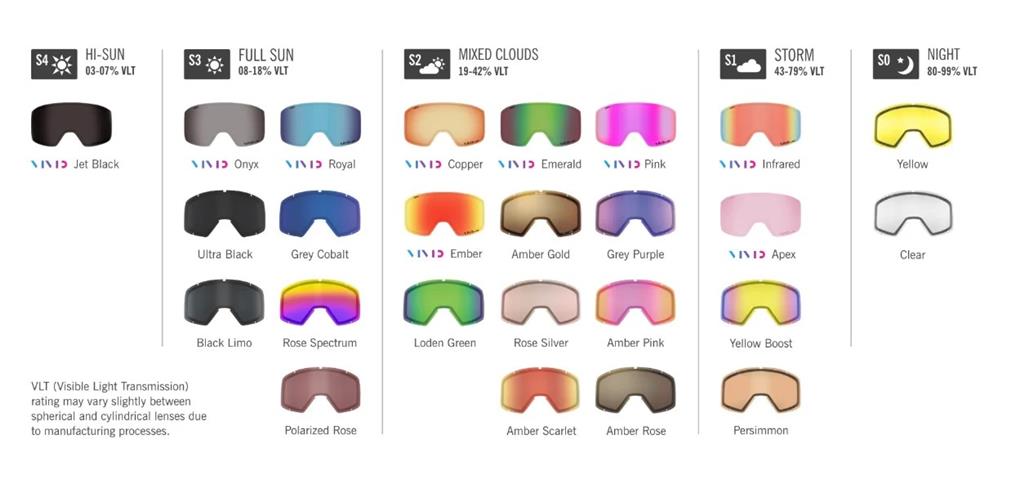
Giro Lens Chart:
Shop Giro Goggles
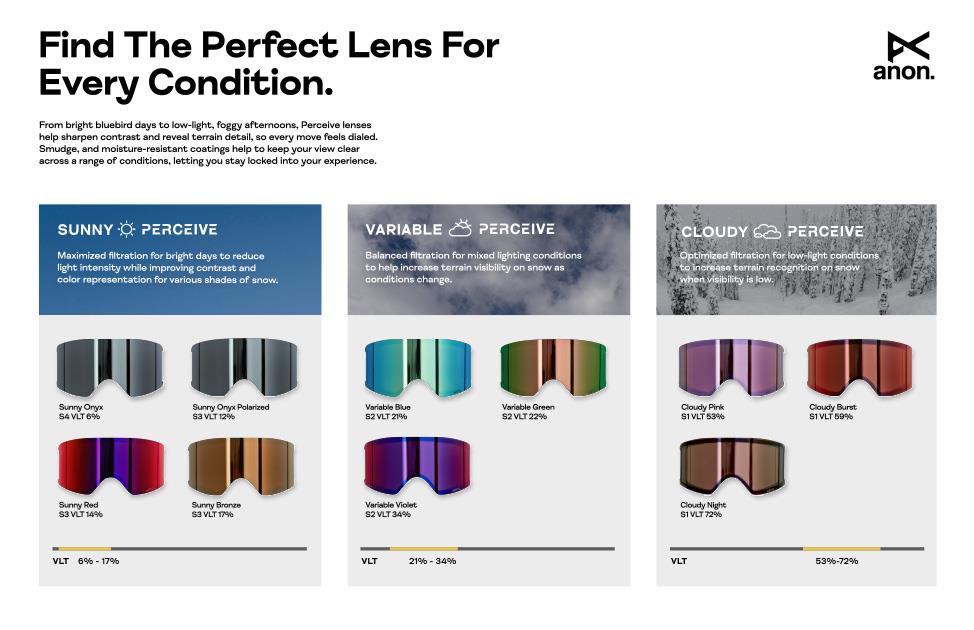
Anon Lens Chart:
Shop Anon Goggles
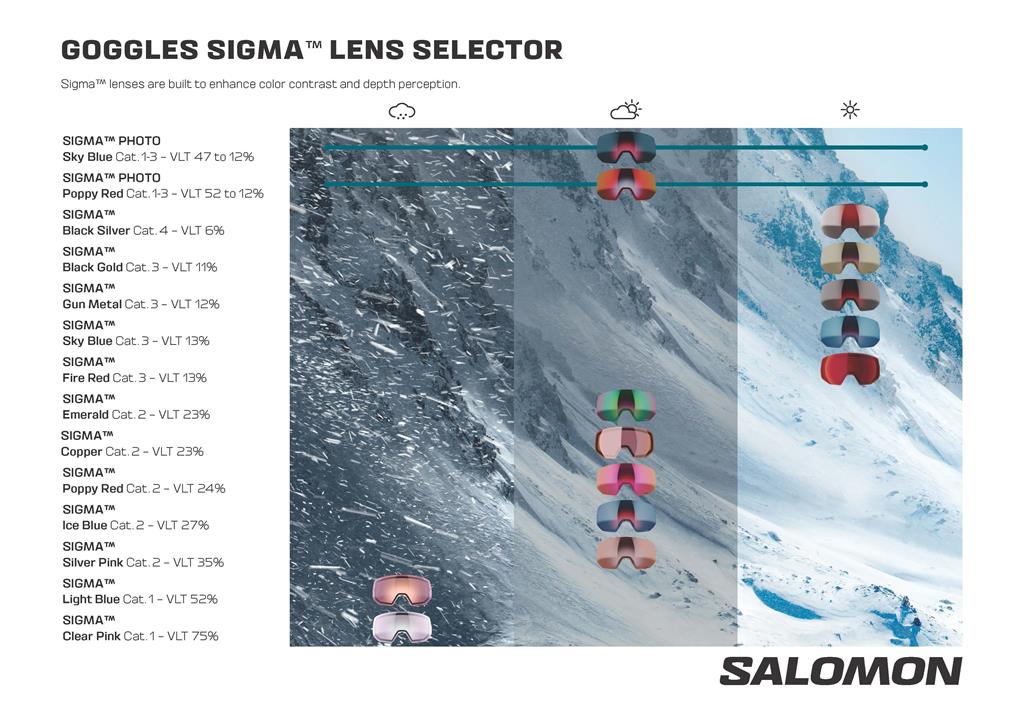
Salomon Lens Chart:
Shop Salomon Goggles
Related Article: How to Choose Ski Goggles
Categories:
Buying Guide
Tagged: Ski Accessories, How to Choose, Goggles