 System vs. Flat Skis
System vs. Flat Skis: What’s the Difference?
Posted
by
Bianca Chang
on Friday, October 24, 2025
System skis. Flat skis. What does it all mean?
As you shop for skis, you’ll notice some are sold as system skis, while others are sold as flat skis. Understanding the difference between the two is key when choosing the right gear, especially when it comes to performance, customization, and cost.
Let’s break it down.
What Are System Skis?
System skis come with bindings already included. These bindings attach to an integrated track system on the ski, allowing them to be easily adjusted to fit different boot sizes.
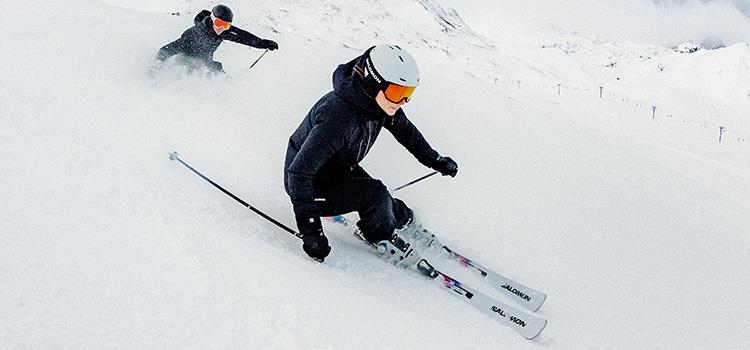
This track binding setup offers flexibility, perfect for growing skiers or families who plan to pass skis down to younger members. The bindings can be moved up or down the track without re-drilling, making adjustments quick and easy for a professional ski tech.
System skis are most commonly found in beginner to intermediate setups, but are also used for carving skis of all abilities, including experts. Because of the track-mounted bindings, system skis sit higher off the snow, giving the skier more leverage to get the ski on edge, ideal for hardpack and groomed trails.
| Pros of System Skis: |
Cons: |
- Bindings included (often more affordable as a package)
- Easy to adjust for different boot sizes
- Ideal for carving and groomed trails
- Beginner-friendly: softer flex, easier control
- Great for growing kids or resale
|
- Heavier setup due to binding track
- Limited binding options
- Less suited for varied or off-piste terrain
|
What Are Flat Skis?
Flat skis are sold without bindings, giving you the freedom to choose your own. These skis require bindings to be drilled directly onto the skis at your specific boot sole length and personal preferences, like mounting location.
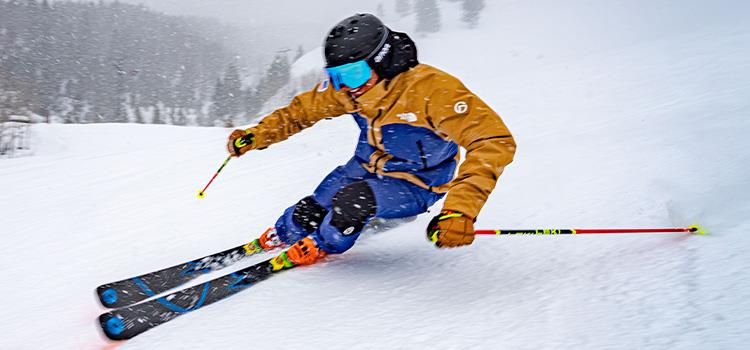
Flat skis are typically geared toward intermediate to advanced skiers who want more customization and plan to ski in a variety of conditions like trees, powder, park, bumps, and backcountry. The skis themselves tend to be lighter, and you can pair them with lighter or specialized bindings based on your needs.
Flat skis also open the door to more performance-specific options like freeride skis, powder skis, park skis, and versatile all-mountain skis.
| Pros of Flat Skis: |
Cons: |
- Choose your own bindings
- Customize to your sole length and desired mounting location
- Lighter setup
- Greater variety of skis for varied terrain
- Ideal for more advanced skiers or those exploring the mountain
|
- Bindings not included (added cost)
- Less flexibility for adjusting to different boot sizes
- Can only be drilled a limited number of times (typically 3)
- If you switch boots, the bindings may need to be adjusted or remounted
|
Which One Is Right for You?
If you're new to skiing, sticking to groomed runs, or want a setup that’s easy to adjust and maintain, a system ski is likely the best option. It offers great value, convenience, and stability for progressing skiers.
If you're an experienced skier looking for a more customizable, high-performance setup for exploring varied terrain, flat skis will give you the flexibility and specialized performance you’re after.
No matter which route you go, make sure your bindings are mounted and adjusted by a certified ski tech to ensure safety and performance.
|
System Skis |
Flat Skis |
| Best for |
Beginners or groomer-focused skiers |
Intermediate to expert skiers, all-mountain/freeride terrain |
| Bindings |
Included, adjustable track system |
Not included, mounting required |
| Adjustability |
High – great for growing skiers |
Low – bindings have some adjustment, but may require a remount |
| Weight |
Heavier setup |
Typically lighter |
| Terrain |
Groomed runs, hardpack, carving, mixed terrain, resort |
Trees, bumps, park, powder, mixed terrain, on resort and backcountry |
| Cost |
Usually lower (package deal) |
The total package is typically more expensive than system skis |
Categories:
Buying Guide
|
Skills & Advice
Tagged: Ski, Beginner Tips, How to Choose